1. Introduction to SEO
What Is SEO?
Introdution (SEO) refers to
he strategic set of practices designed to increase a website’s visibility on search engine results pages (SERPs). When users search for information, products, or services, they typically click on the top results. SEO ensures that a website ranks higher for relevant queries, ultimately driving more organic traffic. It is a blend of technical configuration, content creation, keyword planning, and link-building—each working together to enhance discoverability and authority.
2. Why SEO Matters
In a digital ecosystem defined by competition, visibility is critical. SEO matters because it improves the chances of a website being found by target audiences without relying solely on paid advertising. High search rankings signal trust, authority, and relevance. For businesses, SEO not only increases web traffic but also boosts brand awareness, credibility, and conversion rates. Most online journeys begin with a search engine query, and SEO positions a brand to capitalize on that behavior.
3.
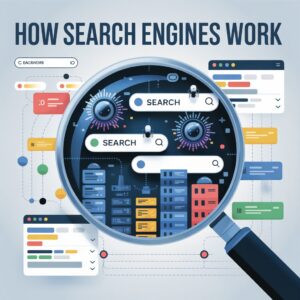
To understand SEO, it is essential to understand how search engines operate. Search engines perform three fundamental tasks: crawling, indexing, and ranking. Crawling involves scanning websites and reading content using automated bots. Indexing organizes this information in a vast database. Ranking determines where pages appear in search results based on relevance, quality, authority, and user intent. SEO optimizes each of these touchpoints, ensuring that content is easy for search engines to crawl, understand, and evaluate appropriately.
4. On-Page SEO Essentials And What Is SEO
On-page SEO focuses on optimizing individual pages to improve search visibility. This includes keyword research, thoughtful placement of keywords in titles and headings, crafting meta descriptions, and structuring content using a logical hierarchy. URL structure, internal linking, and image optimization also play key roles. Effective on-page SEO delivers content that is both valuable to users and clear to search engines. High-quality, original, and intent-focused content remains the cornerstone of on-page optimization.
5. Off-Page SEO and Backlinks
Off-page SEO encompasses all optimization activities performed outside the website. The most influential component is backlink building—earning links from reputable and relevant websites. These links act as endorsements, signaling credibility and authority. Other off-page elements include brand mentions, social signals, and guest posting. Google’s algorithm prioritizes trustworthy and authoritative sites, so off-page SEO directly affects how search engines assess domain reputation and reliability.
6. Technical SEO Foundations
Technical SEO ensures a website’s infrastructure is optimized for crawling and indexing. Important factors include site speed, mobile responsiveness, secure connections (HTTPS), XML sitemaps, clean code, and minimal server errors. Search engines favor websites that deliver seamless performance across all devices. Technical SEO also supports accessibility, structured data markup, and proper canonicalization. Without a strong technical foundation, other SEO efforts—such as content creation or backlink acquisition—become less effective.
7. SEO Content Strategy
Content lies at the heart of successful SEO. A strong SEO content strategy begins with understanding user intent—what people want when they conduct a search. Content must address those needs while incorporating keywords naturally. Long-form articles, blogs, guides, product descriptions, and multimedia assets all contribute to SEO performance. Search engines reward content that is updated regularly, well-researched, original, and comprehensive. A sound content strategy improves engagement metrics such as time on page and reduces bounce rates.
8. Local SEO and Its Importance
Local SEO focuses on optimizing a website for location-based searches, helping businesses appear in local listings, Google Maps results, and localized SERPs. It is especially critical for physical stores, service providers, restaurants, and local professionals. Key components include optimizing the Google Business Profile, maintaining consistent name-address-phone (NAP) information, and earning local reviews. Local SEO enhances visibility among nearby customers actively seeking relevant services.
9. Measuring SEO Success
SEO success is measured using a range of performance indicators. Key metrics include rankings for target keywords, organic traffic growth, click-through rates (CTR), bounce rates, time on site, conversion rates, and backlink quality. Analytics tools such as Google Analytics, Google Search Console, and third-party platforms provide actionable insights. Continuous measurement and refinement are essential, as SEO is an ongoing process rather than a one-time task. Effective measurement ensures that strategies remain aligned with evolving search engine algorithms and user behavior.
10. The Future of SEO
SEO is constantly evolving, driven by advancements in artificial intelligence, voice search, and user experience design. Modern SEO increasingly prioritizes conversational search, semantic understanding, and personalized results. Google’s algorithms now emphasize human-centric metrics such as expertise, authoritativeness, and trustworthiness (E-A-T). As technology progresses, SEO will continue to blend technical proficiency with high-quality content and user-first design. Businesses that remain adaptable will benefit from long-term visibility and sustained organic growth.
Follow me on Instagram
Internal Link